In the mystical and ancient land of Saudi Arabia, where the weight of tradition and the echoes of faith resound, a remarkable event has unfolded. As the custodian of the two holiest sites in Islam, Saudi Arabia bears a sacred responsibility to safeguard and preserve the cherished religious values that resonate within the hearts of Muslims worldwide. However, an intriguing and thought-provoking development has taken place, one that beckons us to critically examine the delicate balance between tradition and artistic expression.
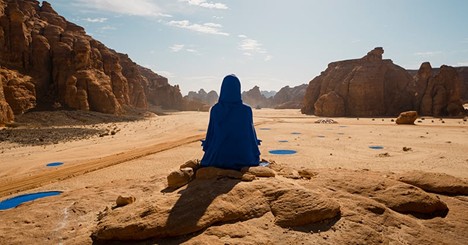
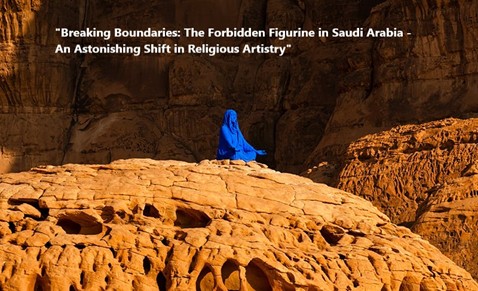
In a recent art exhibit, on a big anamorphous rock in AlUla, an ancient oasis in the Medina region of Saudi Arabia, an electric blue sculpture of a woman is made, seated in the meditative yogic position called “lotus.” Her legs are crossed while her hands extend out with her palms open on either knee. Her eyes are closed as she connects with the silence and nature that surrounds her. its the first time in over 1,000 years that a figurative female sculpture has been displayed in Saudi Arabia, where Islamic art forbids figurative representation, especially of women. This fictional female astronaut (NAJMA- means ‘star’ in Arabic) arrived on earth to spread knowledge and understanding throughout the planet, according to the artist Lita Albuquerque (Tunisian Catholic). She added “The doors have finally opened to something collaborative like this bringing international, Middle Eastern and Saudi artists together.” It is historic, she says, not only that the figure is being shown, but that “it is accepted.”
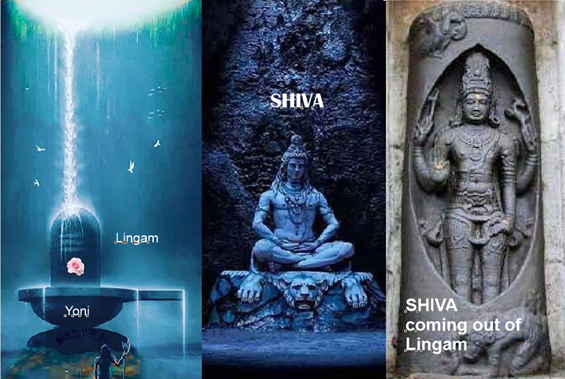
To understand the significance of this unveiling, let us delve into the realms of Hindu mythology. Shiva, the celestial deity often adorned with a captivating blue complexion, emerges as an eternal entity beyond human comprehension. In the enigmatic portrayals of Shiva, we witness a convergence of transcendence and spirituality, reflected in the symbolism of his blue hue. Ardhanarishvara, a composite form embodying both masculine and feminine attributes, epitomizes the harmonious blending of these dualistic forces.
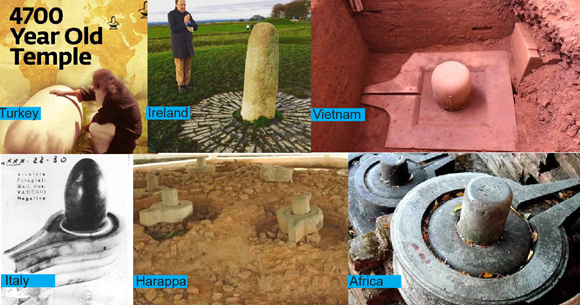
The lingam, a sacred symbol associated with Shiva, found its way to distant lands, embraced by ancient civilizations such as the Romans in Europe and the inhabitants of Babylon in ancient Mesopotamia. Lingam statues unearthed in the archaeological marvels of Harappa-Mohenjo-Daro reveal the existence of a highly evolved culture predating the arrival of the Aryans.
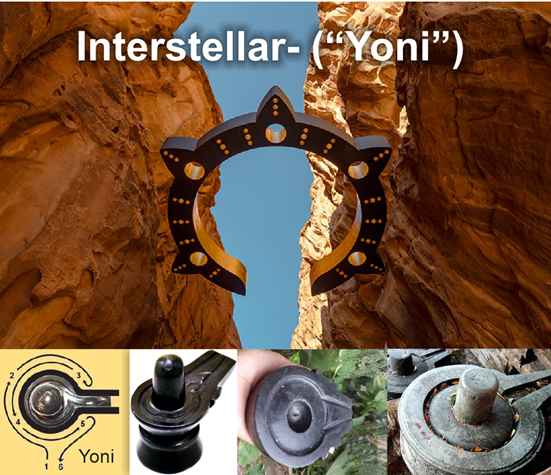
The circular base of the Lingam, often depicted as the pedestal or platform on which the Lingam rests, is called the “Yoni.” The term “Yoni” translates to “womb” or “source” in Sanskrit and symbolizes the feminine aspect of creation and the “cosmic womb” (interstellar- rings a bell) !!
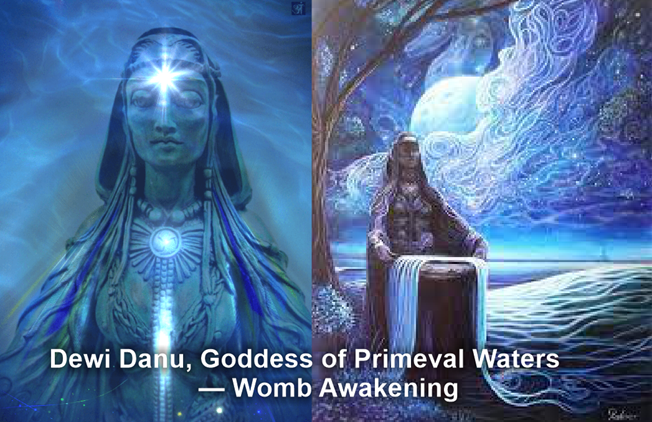
Interestingly, even in European traditions, traces of reverence for the divine feminine persist. The goddess Danu, an embodiment of a river, with her vibrant blue hues, captivated the imaginations of ancient cultures. Yet, as history unfolded, Christian monks interpreted such pagan stone idols, reminiscent of fertility (womb), with skepticism and disdain.
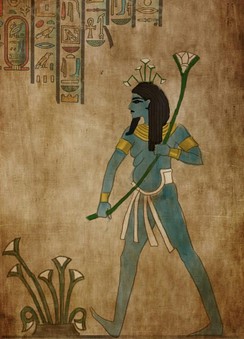
Even in ancient Egypt, Hapi reigned as the god of the annual flood of the blue Nile, bestowing fertile soil for agriculture. Depicted as an androgynous (both masculine and feminine characteristics) deity, Hapi’s portrayal included a round belly, drooping breasts, and traditional garments, symbolizing the essence of fertility and the womb. The lotus plant served as a prominent symbol associated with Hapi, represented in color blue in Egyptian mythology.
Amidst this intricate tapestry of symbolism and religious connotations, we cannot overlook the cautionary notes sounded in the Hadiths, the sayings and actions of the Prophet Muhammad (peace be upon him). These prophetic utterances speak of a future in which the return of idol worship in Arabia intertwines with collaboration between followers of Islam, Jews, and Christians, marking a sign preceding the Day of Judgment.
- Sahih Muslim, Book 1, Hadith 293:
Narrated by Abu Huraira, the Prophet Muhammad (peace be upon him) said, “The Hour (i.e., the Day of Judgment) will not be established until the tribes of my ummah (followers) unite with the idolaters and worship idols.”
- Sahih Muslim, Book 1, Hadith 296:
Narrated by Abdullah ibn Amr, the Prophet Muhammad (peace be upon him) said, “The Hour will not be established until the tribes of my ummah unite with the Jews and Christians.”
Thus, as we stand on the threshold of a historic moment, the presence of the female sculpture in Saudi Arabia beckons us to ponder the delicate interplay between artistic expression, religious values, and the timeless quest for understanding. It challenges us to explore the boundaries of faith, while also safeguarding the purity and essence of our beliefs. Saudi Arabia, as the guardian of the two holiest sites in Islam, holds a solemn responsibility to navigate this delicate path with wisdom, ensuring that the preservation of faith and the artistic expressions of humanity harmoniously coexist.
By: Naveeda Sultan